
UAE Faces 600,000 Cyberattacks a Day as Cybersecurity Chief Warns of Three Major Threats
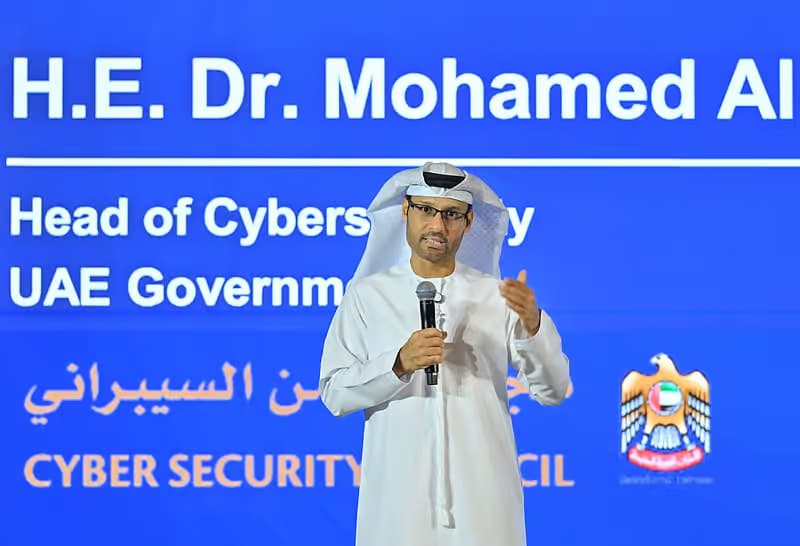
The UAE is facing hundreds of thousands of cyberattacks each day, with cybercrime, cyberterrorism and cyberwarfare emerging as three major threats to individuals, businesses and critical infrastructure.
The United Arab Emirates is facing an average of approximately 600,000 cyberattacks every day, according to Dr Mohamed Al Kuwaiti, Head of Cybersecurity for the UAE Government.
The number has reportedly climbed as high as 800,000 attacks a day during periods of heightened geopolitical tension, highlighting the growing scale and complexity of the country's cybersecurity challenge.
Speaking about the changing threat landscape, Al Kuwaiti warned that cyberattacks are no longer limited to conventional online crime.
Attackers are increasingly targeting the digital systems that operate essential services, raising concerns about the potential impact on sectors such as aviation, electricity, water and energy.
According to the cybersecurity chief, the UAE's threat environment can broadly be divided into three major categories:
Cybercrime
Cyberterrorism
Cyberwarfare
UAE Cyberattacks Are Becoming More Complex
Cybersecurity threats have evolved significantly as the UAE has expanded its digital economy.
Government services, financial systems, transportation networks, utilities and businesses increasingly rely on interconnected digital infrastructure.
This connectivity creates enormous benefits, but it can also increase the potential impact of a successful cyberattack.
Al Kuwaiti said the current environment is significantly different from previous generations of cyber threats.
Rather than simply stealing information or money, sophisticated attackers may attempt to disrupt essential services or damage the systems responsible for keeping critical infrastructure operational.
That creates a different category of risk for governments and businesses.
The Three Biggest Cybersecurity Threats Facing the UAE
1. Cybercrime
The first major category is conventional cybercrime.
It includes activities such as:
Financial fraud
Data theft
Online scams
Espionage
Identity-related attacks
Malicious software
Information manipulation
Unauthorised access
Cybercriminals can target individuals as well as large organisations.
For consumers, the consequences may include stolen money, compromised accounts or exposure of personal information.
For businesses, attacks can result in financial losses, operational disruption and reputational damage.
As more services move online, cybercriminals have a growing number of opportunities to exploit users and organisations.
2. Cyberterrorism
The second threat highlighted by the UAE cybersecurity chief is cyberterrorism.
Technology and online platforms can be used not only to attack computer systems but also to influence people.
Social media platforms, online communities and gaming environments can potentially be used to spread extremist narratives, misinformation or content intended to influence vulnerable individuals.
The challenge becomes particularly important when young people spend significant amounts of time online.
Al Kuwaiti stressed that awareness among families and communities is an important component of protecting society from these risks.
The Rise of Individual Radicalisation
Another concern is the evolution from large organised groups toward what Al Kuwaiti described as the "lone wolf" model.
In this scenario, an individual may be influenced or radicalised online before acting independently.
Digital platforms can make it easier for individuals to encounter harmful ideological material without being physically connected to an organised group.
This makes prevention more complicated because the threat may emerge from an individual rather than a clearly identifiable organisation.
For governments, families and communities, early awareness therefore becomes an important part of prevention.
Online Content and Children
The cybersecurity chief also raised concerns about children's exposure to violent content through online games and digital platforms.
Young people increasingly interact with virtual environments from an early age.
While games are designed as entertainment, children may encounter content that blurs the distinction between virtual behaviour and real-world consequences.
This creates an important role for parents.
Families need to understand what children are watching, playing and interacting with online.
More importantly, children need to develop the ability to distinguish between virtual experiences, online influence and real-world behaviour.
3. Cyberwarfare Is a Growing Concern
The third and potentially most disruptive category is cyberwarfare.
Unlike conventional cybercrime, cyberwarfare can involve attempts to disrupt or damage the digital infrastructure that supports essential national services.
The consequences could extend far beyond computers or individual networks.
A successful attack against critical systems could potentially affect:
Airports
Aviation systems
Electricity networks
Water infrastructure
Energy facilities
Government services
Telecommunications
Transportation systems
The objective may not simply be to steal information.
It could be to disrupt the operation of an entire service.
Why Critical Infrastructure Is a Major Target
Modern infrastructure is increasingly dependent on digital technology.
Airports use interconnected systems to coordinate operations.
Power networks depend on digital monitoring and control systems.
Water facilities use automated technologies to manage treatment and distribution.
Energy infrastructure relies heavily on computerised systems.
This interconnectedness creates efficiency but also introduces cybersecurity risks.
A malicious programme that appears relatively small could potentially create significant disruption if it gains access to a critical system.
That is why governments increasingly consider critical infrastructure cybersecurity a matter of national security.
Aviation Is a Particularly Sensitive Area
The UAE's position as a global aviation and transportation hub makes aviation cybersecurity especially important.
Airports and airlines depend on complex digital systems for operations, scheduling, communications and other essential processes.
A cyber incident affecting these systems could potentially create delays, cancellations or wider operational disruption.
The cybersecurity chief highlighted the possibility of malicious software affecting aviation infrastructure as an example of how a relatively small digital intrusion could have much larger consequences.
The concern is not necessarily that one computer virus would directly control an aircraft.
Instead, the risk comes from disruption to the interconnected digital systems that support aviation operations.
Cybersecurity in the Age of Artificial Intelligence
Artificial intelligence is creating another layer of complexity.
AI can help organisations detect suspicious activity, analyse enormous quantities of security data and identify potential threats more quickly.
However, the same technologies can also be used by attackers.
AI can potentially make phishing messages more convincing, automate certain malicious activities and make it easier to create manipulated content.
This means cybersecurity strategies must evolve alongside AI.
The UAE's cybersecurity challenge is therefore no longer simply about protecting computers.
It is increasingly about protecting a digital ecosystem in which AI, cloud computing, connected devices, autonomous systems and digital infrastructure interact with one another.
"Seeing Is No Longer Believing"
One of the most important warnings from Al Kuwaiti concerns the reliability of information encountered online.
As AI-generated content becomes more sophisticated, distinguishing between genuine and manipulated material is becoming increasingly difficult.
Images, videos, audio recordings and written messages can all potentially be altered or generated using modern AI tools.
This creates a new challenge for individuals.
People can no longer automatically assume that something is authentic simply because they can see or hear it.
Instead, users should verify information before:
Clicking unfamiliar links
Downloading applications
Sharing personal information
Sending money
Responding to unexpected messages
Sharing potentially misleading content
Cybersecurity Awareness Is the First Line of Defence
Technology alone cannot eliminate cybersecurity threats.
According to Al Kuwaiti, individuals and communities have an important role to play in protecting the country.
This means cybersecurity awareness needs to extend beyond government departments and specialist security teams.
Employees, parents, students, businesses and ordinary internet users all have a role.
Simple habits can reduce exposure to common attacks.
Users should:
Use strong and unique passwords
Enable multi-factor authentication where available
Avoid suspicious links
Verify unexpected messages
Keep software updated
Be careful with unknown applications
Check information before sharing it
Protect sensitive personal information
Be cautious when financial requests arrive unexpectedly
Parents Have an Important Role
Children are among the most active users of digital platforms, making parental awareness particularly important.
Parents should understand what platforms their children use and who they interact with online.
Open communication can make it easier for children to report suspicious or uncomfortable interactions.
The goal is not necessarily to prevent children from using technology.
Instead, it is to help them develop healthy digital habits and recognise potentially dangerous situations.
The UAE's Whole-of-Nation Approach
The UAE's cybersecurity strategy extends beyond government institutions.
Al Kuwaiti described the country's approach as a whole-nation effort, meaning cybersecurity awareness should involve society as a whole.
Government agencies can establish security systems and policies, but individuals and organisations must also follow safe digital practices.
This approach recognises that cybersecurity is interconnected.
A weakness at one organisation or individual account can sometimes create opportunities for attackers to target a much larger network.
Cybersecurity Awareness Through Community Initiatives
The UAE has also been using public initiatives to increase awareness about cybersecurity.
One example is the Cyber Run, which combines community activities and cybersecurity education.
The objective is to take cybersecurity discussions outside government offices and specialist technology environments.
By engaging families, young people and communities, such initiatives aim to make cybersecurity part of everyday digital behaviour.
Technology Will Continue to Change
The UAE is moving rapidly through successive waves of technological development.
Digital transformation has been followed by increasingly sophisticated e-government services, artificial intelligence, autonomous technologies, quantum computing research, robotics and drones.
Each technological development creates new opportunities.
But each can also introduce new cybersecurity challenges.
This means cybersecurity cannot remain static.
Security strategies must evolve as quickly as the technologies they are designed to protect.
The Human Factor Remains Critical
Despite the increasing sophistication of cybersecurity technology, the human element remains central.
Technology can detect threats, block malicious activity and monitor networks.
But users still make decisions.
People decide whether to click a link, share information, download an application or respond to a suspicious message.
That is why cybersecurity awareness remains essential.
A highly sophisticated security system can still be undermined by a simple human mistake.
What UAE Residents Should Do Online
The message from the UAE cybersecurity leadership is ultimately straightforward:
Stop, verify and think before acting online.
Before responding to an unexpected message, users should ask:
Do I know who sent this?
Is the request genuine?
Is the website legitimate?
Am I being pressured to act quickly?
Is someone asking for money or sensitive information?
Can I independently verify the claim?
Taking a few seconds to verify information can prevent significant losses.
UAE Cybersecurity Outlook
The UAE's digital transformation is expected to continue, with AI and other emerging technologies becoming increasingly important across government, business and society.
That transformation will bring significant economic and social benefits.
However, the country's cybersecurity environment will also become more complex.
Cybercrime, cyberterrorism and cyberwarfare represent different types of threats and require different responses.
At the same time, AI-generated misinformation, increasingly sophisticated attacks and interconnected critical infrastructure are creating new challenges.
The UAE's ability to respond will depend not only on advanced cybersecurity technologies but also on the awareness and behaviour of the people using those technologies.
Conclusion
The UAE is dealing with a rapidly evolving cybersecurity landscape, with approximately 600,000 cyberattacks reported each day and significantly higher volumes during periods of heightened conflict.
The country's cybersecurity leadership has identified three broad areas of concern: cybercrime, cyberterrorism and cyberwarfare.
While cybercrime continues to threaten individuals and organisations, the potential impact of cyberwarfare against critical infrastructure represents a particularly serious national security concern.
At the same time, AI is making online information increasingly difficult to verify and creating new opportunities for both attackers and defenders.
The response therefore cannot rely solely on government agencies or cybersecurity professionals.
Businesses, families and individuals all have a role to play.
In an increasingly connected world, cybersecurity is no longer only a technology problem—it is a shared responsibility.
Frequently Asked Questions
How many cyberattacks does the UAE face each day?
According to UAE government cybersecurity chief Dr Mohamed Al Kuwaiti, the UAE faces an average of approximately 600,000 cyberattacks per day, with the number reaching around 800,000 during periods of heightened conflict.
What are the three major cyber threats facing the UAE?
The three broad categories identified are cybercrime, cyberterrorism and cyberwarfare.
What is cyberwarfare?
Cyberwarfare involves the use of digital attacks to disrupt, damage or compromise systems associated with governments, critical infrastructure or essential services.
Why is critical infrastructure vulnerable to cyberattacks?
Modern infrastructure such as airports, electricity networks, water systems and energy facilities increasingly relies on interconnected digital technologies. A successful cyberattack could therefore disrupt physical services through digital systems.
How is AI changing cybersecurity threats?
AI can help defenders detect threats and analyse security data, but attackers can also use AI to create more convincing scams, automate malicious activities and generate manipulated or fabricated content.
How can people protect themselves from cyberattacks?
People should verify unexpected messages, avoid suspicious links, use strong passwords and multi-factor authentication, keep software updated and think carefully before sharing personal information or sending money.
Why is cybersecurity awareness important?
Cybersecurity systems cannot prevent every attack. Individual decisions and behaviour can significantly influence whether an attack succeeds, making public awareness an important part of national cybersecurity.